How bad is a termite infestation?
A termite infestation and damage can be devastating to your home or property. Termites are often called the “silent destroyer” because they may secretly hide and thrive in your home or yard without any immediate signs of damage, just like bed bugs or dust mites. All termites consume cellulose-based plant materials. Unfortunately, all homes, regardless of their construction type, can provide cellulose food for termite infestation. Termite infestation is problematic and needs to be controlled. If you need residential pest control, contact us today.
Identifying termites
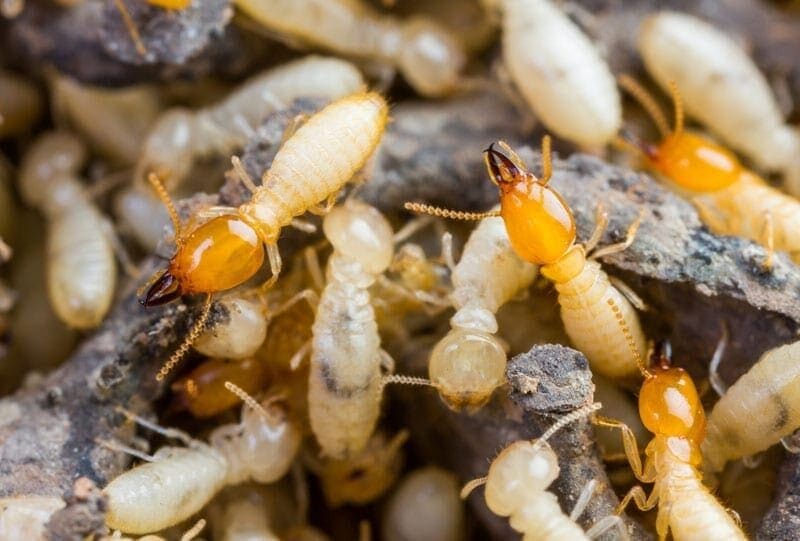
Although termites have distinct characteristics, most look similar. They typically measure 1/4 and 1/2 of an inch long and have soft bodies with straight antennae. The queens and kings are more prominent, capable of reaching over one inch long. Colors range from white to light brown, where worker termites often appear lighter while swarming termites are darker. Flying termites, also called reproductives, have two pairs of prominent wings. Our pest control services can fix your termite problems.
What are the signs of a termite infestation?
- Discolored or drooping drywall
- Peeling paint that resembles water damage
- Wood that sounds hollow when tapped
- Small, pinpoint holes in drywall
- Buckling wooden or laminate floorboards
- Tiles loosening from the added moisture termites can introduce to your floor
- Excessively squeaky floorboards
- Crumbling, damaged wood
- Stuck windows or doors
- Maze-like patterns in furniture, floorboards, or walls
- Mounds of dry wood termite pellets, often resembling small piles of salt or pepper
- Piles of wings left behind after swarms, often resembling fish scales
- Mud tubes climbing the foundation of your home
- Flying termite swarms anywhere on your property